
Top 10 Systems Integration Consulting Companies In Canada 2027

Choosing the right Systems Integration Consulting partner in Canada will shape how your 2027 technology roadmap actually performs. Canadian businesses are connecting more systems than ever this year, from CRMs and ERPs to AI agents and finance platforms. A weak integration partner leaves you with broken data flows and delayed projects. A strong one gives you accurate data, fewer manual handoffs, and systems that actually talk to each other. This list breaks down ten Systems Integration Consulting companies worth evaluating in Canada for 2027. It also covers what separates a good partner from a risky one.
What to Look for in a Systems Integration Consulting Partner
Not every systems integrator offers real Systems Integration Consulting. Some just sell licenses and walk away. A genuine Systems Integration Consulting partner maps your current systems before recommending any platform. They document data ownership, sync rules, and error handling so your team is not locked into one vendor. Pricing flexibility also matters. Fixed-cost, hourly, retainer, and revenue-share models each suit a different kind of project. Look for a partner who stays tool-agnostic instead of pushing one platform on every client. Ask about documentation too, since that is what keeps your team independent after launch.
The Top 10 Systems Integration Consulting Companies in Canada for 2027
The following ten companies represent a mix of enterprise-scale integrators and specialized Systems Integration Consulting firms. Company sizes, industries served, and pricing models vary widely. Compare them against your own project scope, timeline, and budget before reaching out.
1. dipoleDIAMOND
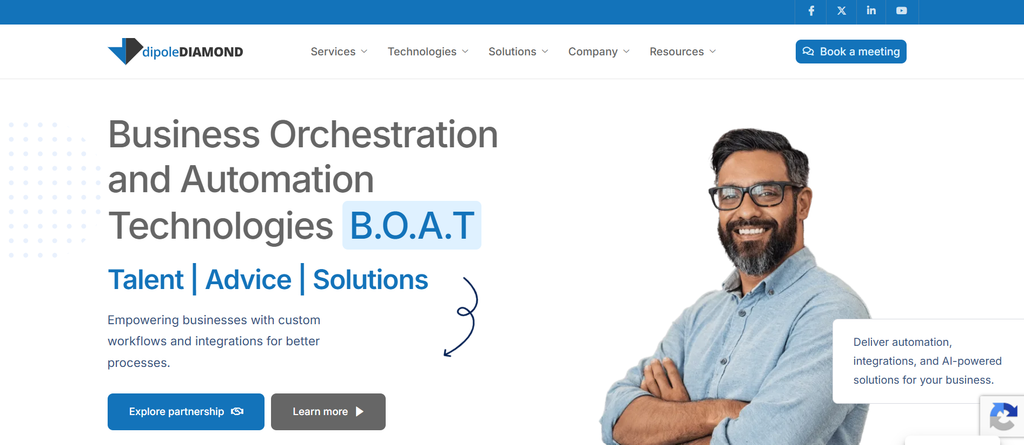
dipoleDIAMOND is a Business Orchestration and Automation Technologies partner based in Niagara Falls, Ontario. Delivery runs through a team in Lagos, Nigeria. The firm focuses on systems integration, process automation, and AI agents for mid-sized companies and consulting firms. dipoleDIAMOND connects CRMs, ERPs, and legacy systems without requiring clients to add developers to their team. Engagements follow a three-step process: discovery, solution blueprint, and delivery, with documentation and training included at every stage. Pricing is flexible, covering fixed-cost, hourly, retainer, and revenue-share models. This makes dipoleDIAMOND a strong fit for software implementation consultants and agencies. They need a technical delivery partner, not just another vendor.
2. CGI
CGI is one of Canada’s largest IT and Systems Integration Consulting firms, founded in Montreal in 1976. The company serves large enterprises and government agencies across cybersecurity, cloud, AI, and systems integration. CGI supports the full project lifecycle, from strategy through execution and ongoing support. This scale suits organizations with complex, multi-year integration programs. Smaller businesses may find CGI’s engagement model heavier than they need.
3. Accenture Canada
Accenture operates across major Canadian cities and ranks among the largest global Systems Integration Consulting providers. The firm specializes in large-scale systems integration, cloud transformation, and digital strategy execution. Accenture typically works with enterprise clients running complex, multi-platform environments. Project budgets and timelines here run well beyond what most mid-sized companies plan for. Businesses with smaller integration needs often look elsewhere for faster, more flexible delivery.
4. Osedea
Osedea is a midsize technology firm headquartered in Montreal, founded in 2011. The team combines artificial intelligence development with custom software and systems integration work. Osedea often partners with businesses that need both new application development and integration into existing platforms. This dual focus works well for companies modernizing legacy software while connecting it to newer tools.
5. Denologix
Denologix is a midsize firm with offices in Toronto, Vancouver, New York, and Chicago. The team focuses on HR systems modernization, cloud migration, and data integration projects. Clients frequently note the firm’s technical proficiency and collaborative project management style. Denologix suits organizations replacing older HR or data platforms with modern, connected systems.
6. Adastra
Adastra is a Canadian IT consulting firm known for data analytics, governance, and cloud integration work. The team helps organizations modernize data landscapes and connect AI tools into existing infrastructure. Adastra’s client base spans multiple industries, from finance to manufacturing. Reviewers note strong technical depth, though onboarding resources could be more detailed.
7. Computan
Computan has offered CRM consulting and Systems Integration Consulting services since 1987. The firm is based in Thorold, Ontario, with a second office in Irving, Texas. Computan focuses heavily on CRM implementations, e-commerce integrations, and web development. Nearly four decades in business gives the firm deep experience with legacy CRM migrations.
8. Blueacrobat Corporation
Blueacrobat Corporation is an ERP consulting and Systems Integration Consulting firm founded in 2009. The company runs a small team focused on ERP implementations and managed IT services. This smaller footprint can mean more direct access to senior consultants during a project. It may also limit capacity for very large, multi-region integration programs.
9. Zazz
Zazz is a software engineering and IT services firm based in Toronto. The team works on enterprise resource planning, big data, and systems integration projects for larger clients. Minimum project costs here tend to run higher than smaller boutique firms charge. Zazz fits companies tackling legacy modernization or complex technical debt across multiple systems.
10. Whitecap Canada
Whitecap Canada has operated in Toronto since 1997, focusing on custom software development and analytics. The team also handles business intelligence, artificial intelligence, and systems integration work. Nearly three decades of operation gives Whitecap a long track record with Ontario-based clients. The firm suits businesses wanting one partner across both custom development and integration.
Systems Integration Consulting Costs in Canada for 2027
Pricing varies a lot depending on how many systems are involved and how urgent the timeline is. The table below is a starting reference, not a quote, so treat it as a planning tool rather than a fixed price list.
| Engagement Type | Typical Cost Range (CAD) | Typical Timeline |
|---|---|---|
| Single-system API integration | $8,000 to $20,000 | 4 to 6 weeks |
| CRM to ERP integration | $25,000 to $75,000 | 8 to 16 weeks |
| iPaaS platform implementation | $20,000 to $60,000 | 6 to 12 weeks |
| Multi-system enterprise program | $100,000 to $500,000 or more | 4 to 12 months |
| Ongoing integration retainer | $2,000 to $10,000 per month | Continuous |
Use this table to sanity-check any proposal you receive. A quote far outside these ranges is worth asking the firm to justify, either way.
How to Choose the Right Systems Integration Consulting Partner
Picking from this list takes more than comparing company size. Start by defining whether you need one integration or an ongoing partnership. A single CRM-ERP connection project needs different expertise than a multi-year automation program.
Next, compare the build-versus-buy question directly. Our breakdown of in-house automation developer vs outsourced business automation consultant costs walks through the real math most proposals skip.
If your project connects a CRM and ERP, read what should be included when you hire an iPaaS implementation partner. Do this before signing a contract. Procurement teams weighing similar automation spend can check what to expect to pay a procurement consulting firm for procure-to-pay automation.
Ask every shortlisted firm the same three questions. Who owns solution design versus who just builds tickets? What documentation do you hand over at the end? What happens if requirements change mid-project?
Why dipoleDIAMOND Stands Out on This List
Most firms on this list serve either large enterprises or general IT needs. dipoleDIAMOND focuses specifically on businesses and consulting firms that want technical delivery without adding headcount. The B.O.A.T model pairs Systems Integration Consulting with process automation and AI agents under one engagement. Flexible pricing means you are not locked into a retainer sized for a bigger company. Every project includes documentation and training, so your team can run what gets built. If you are ready to compare a real quote against this list, book a consultation with the dipoleDIAMOND team.
Frequently Asked Questions
What does a Systems Integration Consulting company actually do?
A Systems Integration Consulting company connects separate software systems so they share data automatically. This includes syncing CRMs, ERPs, and other platforms without manual data entry. The work covers architecture design, building the connections, and testing before launch.
How much does Systems Integration Consulting cost in Canada in 2027?
Costs vary by project scope and system complexity. A single API integration often runs 8,000 to 20,000 dollars. Larger CRM to ERP programs typically cost between 25,000 and 75,000 dollars.
What is the difference between a systems integrator and a Systems Integration Consulting firm?
A systems integrator often just connects platforms using existing tools. A Systems Integration Consulting firm also maps your workflows, defines data ownership, and documents the build. This planning work reduces the risk of broken syncs after launch.
How long does a systems integration project take in Canada?
Most single-system integrations take four to six weeks. Multi-system projects, like connecting a CRM and ERP, usually run eight to sixteen weeks. Enterprise-wide programs can stretch beyond a year, depending on scope.
Can a small or mid-sized business afford Systems Integration Consulting?
Yes. Flexible pricing models, including fixed-cost and retainer options, exist specifically for smaller budgets. Many Systems Integration Consulting firms scope projects around a single workflow first. This avoids paying for enterprise-level engagements you do not need.
Should consulting firms hire a Systems Integration Consulting partner instead of building in-house?
For occasional integration work, an outside partner is usually cheaper than a full-time hire. Consulting firms specifically benefit from a technical partner that works under their own client engagements. This lets them deliver bigger projects without expanding permanent headcount.
